
Evolve Health · Specialty
Physical therapy and rehabilitation
Licensed physical therapists using evidence-based treatment, from manual therapy and therapeutic exercise to gait and balance training and neuromuscular rehabilitation, to help you recover after injury or surgery, manage chronic pain and move with confidence. Available at select Evolve Health offices in Florida.
- Same-day or same-week starts
- One-hour visits
- Self-pay, FSA and HSA accepted

Physical therapy services
Everything our therapists use to get you moving again. Filter by what you are looking for; each service gets its own in-depth guide as it is published.
Showing all 8 services
-
Post-surgical rehabilitation
Recovery Post-surgical rehabilitation is physical therapy that follows an operation, such as a joint replacement, ACL repair, spine surgery or Achilles tendon repair. It helps you regain motion and strength safely while the repair heals. Start when your surgeon clears you, and bring any instructions or weight-bearing limits you were given. Your therapist evaluates how you move, sets a plan of care and progresses your exercises as you heal. Keep using any prescribed brace, boot or walker until you are cleared for full weight bearing. -
Sports & orthopedic injury rehab
Recovery This is care for injuries to muscles, tendons, ligaments and joints, such as sprains, tendonitis and overuse injuries from sport, exercise or work. See a physical therapist for pain that returns each time you are active, or an injury that is not improving with rest. Your therapist finds what is limiting you, treats it with hands-on therapy and exercise, and builds your activity back up in stages. The aim is a safe return to your sport or routine, with a lower chance of the injury coming back. -
Manual therapy & joint mobilization
Hands-on Manual therapy is hands-on treatment. Your therapist uses their hands to move a stiff joint (mobilization or manipulation) and to release tight muscle and the tissue around it (myofascial release). It can help when a joint is stiff or painful, or when tight muscles limit how far you can move. It is usually combined with exercise, so the motion you gain in a session is kept between visits. Tell your therapist if a technique is uncomfortable; treatment can be adapted. -
Therapeutic exercise programs
Movement · Recovery Therapeutic exercise is a set of exercises chosen for your condition, not a general workout. It is used to rebuild strength, improve posture and restore movement after an injury, surgery or a long period of pain. Your therapist teaches each exercise, checks how you do it and adjusts the difficulty as you progress. You leave with a few exercises to do at home, because what you do between visits is part of the treatment. Most plans of care run between four and eight weeks. -
Gait & balance training
Movement Gait is the way you walk. Gait and balance training helps if you feel unsteady, have had a fall or a near fall, limp after an injury or surgery, or are learning to walk with a cane, walker or brace. Your therapist watches how you walk and stand, finds the weakness or habit behind the problem, and works on it with strength exercises, balance exercises and walking practice. The goal is a steadier walking pattern and a lower risk of falls and re-injury. Bring any device you normally use. -
Neuromuscular rehabilitation
Recovery · Movement Neuromuscular rehabilitation retrains the way your nerves and muscles work together. It can help when an injury or a condition affecting the nerves has left you with weakness, poor coordination or trouble controlling a movement. Your therapist uses guided, repeated practice of specific movements and positions to rebuild coordination, posture and body control. Progress is gradual, and your plan is adjusted as you improve. -
Vestibular rehabilitation
Movement Vestibular rehabilitation treats dizziness, vertigo (a spinning feeling) and balance problems that come from the inner ear. See a physical therapist if you feel dizzy when you turn your head, roll over in bed or stand up, or if dizziness makes you unsteady. One common cause, called BPPV, can often be corrected with specific head and body movements known as repositioning maneuvers. Other causes are treated with exercises that steady your vision and your balance, so daily movement feels safer and falls are less likely. -
Dry needling
Hands-on Dry needling uses thin needles placed into trigger points, which are tight, tender spots in a muscle. No medication is injected. It is used to relieve muscle tightness and nerve-related pain and to help the muscle move more freely. It is one of several hands-on tools our therapists use, usually alongside manual therapy and exercise. Some soreness in the area afterward is normal. Your therapist will tell you whether it suits your condition.
Don't see what you need? Just ask. Physical therapy is offered at select Florida offices; each location page lists what is available there.
How physical therapy works at Evolve Health
One evaluation, one plan built around your goals, and a team that already knows your history when you walk in.
Evaluate on day one
A brief history, a movement assessment and, when time allows, treatment at the first visit. You leave with a plan and a couple of home exercises.
A plan built around your goals
Most plans of care run four to eight weeks and are adjusted as you progress, whether the goal is walking without pain or returning to sport.
Connected to the rest of your care
If you are recovering from foot or ankle surgery, your therapist and your Evolve Health surgeon work from the same plan, with no hand-off to an outside clinic.
When to see a physical therapist
Physical therapy is not only for after surgery. Starting early usually means a shorter recovery. Book an evaluation if any of these sound familiar.
Find a physical therapist- You are recovering from surgery, such as a joint replacement, ACL or Achilles repair, or spine surgery
- Pain in a muscle or joint that has lasted more than a few weeks
- A sprain, strain or sports injury that is slow to heal
- Dizziness, vertigo or a fall, or a fear of falling
- Stiffness or weakness that limits daily activities
- Posture or movement habits that keep causing the same problem
Your first visit
- LengthOne hour. Arrive about 20 minutes early for paperwork.
- WearComfortable clothes you can move in, like a tee and shorts.
- BringPhoto ID, insurance card, any referral and imaging reports.
- Assistive devicesBring your cane, walker or brace, especially after surgery.
One connected team
Rehab that stays on the same plan
Many of our physical therapy patients come from our own podiatrists and foot and ankle surgeons. Your therapist sees the same history and treatment plan, so recovery starts where surgery left off, inside Evolve Health.
All specialtiesPhysical therapy close to home
Physical therapy is offered at select Evolve Health offices in Florida. Find the closest one, meet its therapists, and book your first visit online.
Physical therapy questions, answered
What to expect at your first visit, how long care takes, referrals, insurance and soreness after sessions.
Physical therapists treat musculoskeletal problems, pain conditions and movement limitations, and guide rehabilitation after injury or surgery. At Evolve Health that includes post-surgical recovery, sports and orthopedic injuries, chronic pain, balance and dizziness disorders and neuromuscular conditions.
If you are Medicare eligible or on a Medicare-related plan, yes: you need a referral from a physician, PA or APRN. With other insurance you can be seen for up to 30 days before a referral is required. Our staff confirms what your plan needs before your visit.
Usually the same day or the same week. Starting early makes a real difference in recovery, so our physical therapy offices keep openings for new evaluations. Book online to see current availability.
Every plan of care is individual, but most run between four and eight weeks. Your therapist sets the plan at your evaluation and adjusts it as you progress.
After check-in, your therapist takes a brief history, evaluates how you move and asks you to perform specific tasks to understand the problem. If time allows, treatment begins the same day. You leave with a plan of care, a few home exercises and your follow-up visits scheduled.
Sessions are scheduled for one hour; arrive about 20 minutes early for your first visit to complete paperwork. Wear comfortable clothing that is easy to move in, such as a tee and shorts, and avoid tight jeans or dresses.
A photo ID, your insurance card, any referral from your doctor, and reports from imaging such as X-rays, MRI or CT. If you normally use a cane, walker or brace, bring it; after surgery, keep using your prescribed device until you are cleared for full weight bearing.
Some soreness is normal when the body is changing, and people respond differently. Gentle movement, your prescribed exercises, and heat or ice on the area usually help. If you are too sore, tell your therapist; treatment can be adapted.
Dry needling uses thin needles to release trigger points in tight muscles, relieving tightness and nerve-related pain while improving circulation. It is one of several hands-on tools our therapists use alongside manual therapy and exercise.
Yes. Vestibular rehabilitation treats dizziness, vertigo and balance disorders, and therapists can correct BPPV, a common inner-ear cause of dizziness, with specific repositioning maneuvers. Gait and balance training also reduces the risk of falls.
At select Evolve Health offices in Florida. Use the locations page to find an office that offers physical therapy, meet its therapists and book online.
We offer self-pay options for patients who do not want, or are not able, to use insurance. FSA and HSA accounts can also be used to pay for physical therapy.
Physical therapy guides
Plain-language answers to the questions patients ask us most.
-
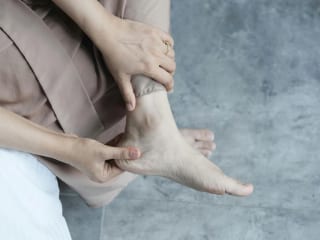
PodiatryPhysical therapy
Arch pain and swelling in active people: relief and return to activityWhy your arch hurts and swells after running, walking or sports, how to calm it down, how to keep training safely and when to see a podiatrist.
-

PodiatryPhysical therapy
Ankle brace for a sprain: which type you need and for how longCompression sleeves, lace-up, stirrup and hinged braces and walking boots compared by sprain grade, plus how long to wear one and how to fit it.
-
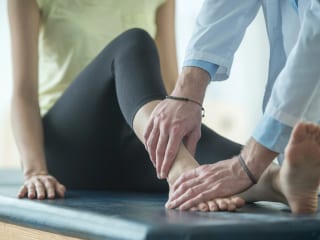
Physical therapy
Foot and ankle physical therapy: what to expect and how long it takesWhat foot and ankle physical therapy involves, the conditions it helps, your first visit, how long recovery takes, home exercises and when you need more.