
Evolve Health · Specialty
Podiatry and foot & ankle care
Board-certified or board-qualified podiatrists and foot and ankle surgeons treating heel pain, bunions, hammertoes, arthritis, tendon and sports injuries and diabetic foot complications across Florida and Texas. Care starts conservative and moves to surgery only when it is the right answer.
- Digital X-ray on site
- Same-day appointments at many offices
- No referral needed for many plans

Podiatry services
Everything our podiatrists diagnose, treat and prevent. Filter by what you are looking for; each service gets its own in-depth guide as it is published.
Showing all 14 services
-
Diabetic foot care
Condition · Treatment Diabetes can reduce feeling and blood flow in the feet, so a small cut or blister can go unnoticed and heal slowly. See a podiatrist for a foot check every 2 months, and sooner if you notice a sore, redness, swelling, drainage or an unusual smell. At each visit we check your skin, nails, feeling and circulation, trim nails and calluses safely, and treat any wound early. When needed, we fit protective shoes or orthotics to take pressure off areas at risk. -
Plantar fasciitis & heel pain
Condition Plantar fasciitis is irritation of the thick band of tissue that runs along the bottom of the foot, from the heel to the ball. The usual sign is sharp heel pain with your first steps in the morning or after sitting. Come in if heel pain keeps returning or limits your day. Most people improve without surgery. Care starts with stretching, supportive shoes, arch supports or custom orthotics and night splints, and can include medication, injections, physical therapy or shockwave therapy. Heel spurs are checked and treated the same way. -
Bunion & hammertoe correction
Condition · Surgery A bunion is a bony bump at the base of the big toe that pushes the toe toward the others. A hammertoe is a toe that stays bent at its middle joint. See a podiatrist when a toe is painful or swollen, or when shoes have become hard to wear. We examine the foot and take X-rays to see how far the joint has shifted. Care starts with roomier shoes and custom orthotics. When those are not enough, surgery can realign the bones and joints. We also treat long toes. A long toe, most often the second toe, is a common inherited trait. It can rub inside shoes, cause corns and calluses, and lead to a hammertoe. Care starts with shoes that have a wider toe box and softer materials, care of the corns and calluses, and strengthening exercises. If the toe still hurts, an outpatient procedure can shorten it, and most people are back in a normal shoe within a few weeks. -
Sprains & fractures
Condition A sprain is a stretched or torn ligament, most often in the ankle after a twist or roll. A fracture is a broken bone, and a stress fracture is a small crack from repeated impact. Come in if you have pain, swelling or bruising, cannot put weight on the foot, or the ankle feels unstable. We examine the injury and X-ray it in the office to tell a sprain from a break. Treatment may include rest, a brace, boot or cast, and rehabilitation to rebuild strength and help prevent repeat sprains. -
Arthritic conditions
Condition Arthritis is the wearing down or inflammation of a joint, and each foot has 33 joints. The types seen most in the foot and ankle are osteoarthritis, rheumatoid arthritis, gout and arthritis that follows an injury. See a podiatrist for joint pain, stiffness or swelling that does not settle. We confirm the type with an exam and X-rays, then build a plan to manage pain, keep the joint moving and slow further damage. Care usually starts with rest and ice, anti-inflammatory medication, physical therapy and custom orthotics. When those are not enough, surgery to replace or fuse the joint may be an option. -
Nail care
Condition · Treatment An ingrown toenail is a nail edge that grows into the skin beside it, causing pain, redness and swelling, and sometimes infection. A fungal nail turns thick, discolored and brittle. See a podiatrist if a nail is painful, red or draining, and do not treat it at home if you have diabetes. Care for an ingrown nail starts with proper trimming, roomier shoes and medication. For a nail that keeps coming back, a minor procedure in the office removes the problem edge. Treatment for a fungal nail depends on how much of the nail is affected. -
Injury & trauma care
Condition · Surgery This covers sudden injuries to the foot and ankle, including strains, tendonitis and tears of the Achilles tendon at the back of the ankle. Signs are pain or swelling behind the ankle, weakness when you push off the foot, or a "pop" followed by sharp pain. Come in promptly after any injury that makes walking difficult. Your plan may include rest, a brace or boot and physical therapy, and surgery for a complete tear. -
Sports medicine
Treatment · Condition Sports medicine is care for foot and ankle injuries that come from sport and exercise, such as plantar fasciitis, Achilles tendonitis, ankle sprains and stress fractures. See a podiatrist for pain that returns each time you are active, or an injury that is not improving. We treat the injury, guide your return to activity, and advise on shoes, orthotics and training to lower the chance of it happening again. It is for anyone who is active, from daily walkers to competitive athletes. -
Custom orthotics
Treatment Custom orthotics are shoe inserts made to the shape of your own feet. They help with flat feet, feet that roll inward too far, arch and heel pain, and knee or lower back discomfort linked to the way you walk. See a podiatrist if your feet tire or ache easily, or if store-bought inserts have not helped. We examine your feet and how you walk, then have orthotics made to fit your shoes and your daily activity. -
Wound care
Treatment · Condition Foot and ankle wounds range from cuts and scrapes to ulcers that are slow to heal, often linked to diabetes or poor circulation. See a podiatrist promptly for any wound that is not healing, or that shows redness, swelling, pain or drainage. We clean and dress the wound, remove unhealthy tissue when needed, take pressure off the area and treat infection. We also look for the cause, so the wound is less likely to return. -
Regenerative medicine
Treatment Regenerative medicine uses your body's own healing response, with treatments such as PRP (platelet-rich plasma) and stem cell therapy. In a PRP treatment, a small sample of your blood is processed to concentrate its platelets, which are then injected at the injury. It may be an option for Achilles tendon problems, plantar fasciitis, ankle sprains and arthritis that have not improved with other care. Your podiatrist will tell you whether it suits your condition. Treatment usually takes one to three sessions, with a follow-up visit two to three weeks later. PRP is offered in Sarasota and is not billed to insurance, so payment is made at the visit. -
Radial shockwave therapy (RSWT)
Treatment Radial shockwave therapy sends pressure waves into an injured area to stimulate blood flow and healing. There are no incisions and no anesthesia. It is most often used for plantar fasciitis and for Achilles and other tendon pain that has not improved with other care. Your podiatrist will tell you whether it suits your condition. Some people notice relief soon after treatment, and the full benefit can take up to 12 weeks. Shockwave therapy is offered at our Winter Garden and Westchase offices. -
Reconstructive surgery
Surgery Reconstructive surgery corrects a deformity or damage in the foot or ankle. Examples are bunion and hammertoe correction, flatfoot reconstruction, Charcot foot reconstruction and ankle reconstruction. It is considered when other care has not relieved the pain, or when the foot or ankle is unstable. Our foot and ankle surgeons review your imaging with you, explain the options and what recovery involves, and recommend surgery only when it is the right answer. -
Digital X-ray
Imaging Every Evolve Health office has digital X-ray. The image is taken in the office and appears on screen within seconds, with less radiation than film X-rays. Your podiatrist uses it to check for fractures, arthritis and joint damage, and to see how the bones are aligned. Because the image is ready right away, you can usually get a diagnosis and start treatment in the same visit, without a separate imaging appointment.
Don't see what you need? Just ask. Services offered can vary by office; each location page lists what is available there.
How we approach foot and ankle care
The same path at every office: understand the problem first, treat it conservatively, and operate only when it is the best option for you.
Diagnose in one visit
A thorough exam, gait evaluation when needed, and digital X-ray on site, so most patients leave the first visit with a diagnosis and a plan.
Conservative care first
Orthotics, footwear guidance, physical therapy, injections, shockwave and regenerative options come before anything invasive.
Surgery when it is the right answer
Bunion and hammertoe correction, tendon repair and reconstruction, using minimally invasive techniques whenever possible.
When to see a podiatrist
Many people wait, hoping discomfort will pass. Early evaluation prevents chronic pain and bigger problems. Book a visit if any of these sound familiar.
Find a podiatrist- Foot or ankle pain that lasts more than a few days or keeps coming back
- Pain that changes how you walk or stand
- Swelling, numbness, tingling or a visible change in shape
- An injury with trouble bearing weight
- An ingrown or infected toenail
- Any foot change if you have diabetes
One connected team
Podiatry is where Evolve Health began
Your podiatrist works alongside the rest of our specialists. When your plan calls for physical therapy or kidney care, the next step happens inside Evolve Health, with the whole picture of your health in view.
All specialtiesPodiatry close to home
Find the office nearest you, see the services it offers, and book online in about a minute.
Podiatry questions, answered
What podiatrists treat, when to come in, referrals, insurance, surgery and what to expect from common treatments.
Podiatrists diagnose and treat conditions of the feet, ankles and lower legs: heel pain and plantar fasciitis, bunions and hammertoes, ingrown toenails, nerve pain, arthritis, tendon injuries, sprains and fractures, sports injuries and diabetic foot problems. Evolve Health podiatrists provide both conservative and surgical care.
If foot or ankle pain lasts more than a few days, affects how you walk, or keeps coming back, schedule a visit. Swelling, numbness, tingling or a visible deformity should not be ignored. Early evaluation prevents chronic pain and complications.
Every office provides podiatric care, but some services, such as shockwave therapy, advanced wound care or outpatient surgery, depend on the office and its specialists. Each location page lists what it offers, or call and our scheduling team will confirm.
Yes. Most patients start with conservative care such as orthotics, therapy and regenerative treatments. When surgery is the right answer, common procedures include bunion correction, hammertoe repair, tendon stabilization and reconstruction, using minimally invasive techniques whenever possible.
In most cases, no; you can book directly. Some plans, especially HMOs, require a referral from your primary care provider. Our staff verifies your plan before your visit.
Many major plans cover medically necessary podiatry, including injury care, diabetic foot management and custom orthotics. We are in-network with many plans in Florida and Texas; see the insurance page or call to confirm your benefits.
Most treatments are designed to relieve pain, not cause it. Conservative options such as orthotics, shockwave and laser therapy are non-invasive, and minor procedures are done under local anesthesia. Your podiatrist explains every step before treatment begins.
Insoles are mass-produced inserts that add cushioning. Custom orthotics are medical devices made from a scan or mold of your feet to correct alignment and redistribute pressure, which helps with plantar fasciitis, flat feet, arthritis and sports strain.
Your podiatrist performs a thorough exam, often with gait analysis or on-site X-ray, to find the cause of your symptoms, then builds a plan that may include therapy, orthotics, medication or a procedure. You do not need to choose a service before you book.
Yes. Podiatrists treat sprains, stress fractures, tendonitis and heel pain common in athletes, and prevent future injuries through gait evaluation, footwear guidance and custom orthotics.
Regular diabetic foot exams, wound management, off-loading and custom footwear, plus education on daily foot care. Consistent visits catch ulcers, infections and pressure points early and help prevent hospitalization.
Plantar fasciitis is inflammation of the ligament that supports your arch and is the most common cause of heel pain. Treatment usually starts with stretching, orthotics and physical therapy, and can include shockwave therapy or PRP injections for stubborn cases.
Podiatry guides
Plain-language answers to the questions patients ask us most.
-

PodiatryPhysical therapy
Arch pain and swelling in active people: relief and return to activityWhy your arch hurts and swells after running, walking or sports, how to calm it down, how to keep training safely and when to see a podiatrist.
-
NephrologyPodiatry
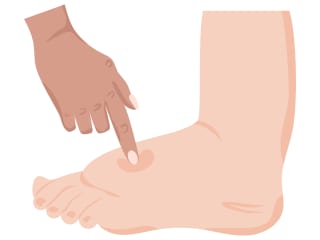
Swollen feet and ankles: common causes and when it’s seriousWhy feet and ankles swell, how to tell everyday puffiness from swelling linked to the heart, kidneys, liver, veins or a blood clot, and when to get help.
-

Podiatry
Ball of foot pain (metatarsalgia): causes, relief and when to worryWhat causes ball of foot pain, from metatarsalgia and Morton’s neuroma to sesamoiditis and stress fractures, how to relieve it and when to worry.