
Health guide · Podiatry
Plantar warts: treatment options, including Swift microwave therapy
What plantar warts are, how to tell them from corns, and how treatments compare, from salicylic acid and freezing to Swift microwave therapy.

The short answer
Plantar warts are rough, grainy growths on the sole caused by a common virus, human papillomavirus (HPV). Many go away on their own within a year or two, especially in children, so a wart that doesn’t bother you can be left alone. For one that hurts or spreads, salicylic acid from a pharmacy, used daily for up to 12 weeks, is a sensible first step.
A podiatrist can offer freezing, blistering medicines, minor procedures, immune treatments and, at some clinics, Swift microwave therapy. No treatment works every time. If you have diabetes, neuropathy or poor circulation, don’t use wart products at home; see a podiatrist.
Want it checked? Find an Evolve Health podiatrist near you
This guide is for general information and is not a diagnosis. Some services may not be offered at every office; your provider will go over your treatment options at your appointment.
What are plantar warts?
Plantar warts are noncancerous growths on the soles of the feet, caused by a common virus, human papillomavirus (HPV). The types of HPV that cause foot warts are different from the types linked to cervical and other cancers.
The virus gets in through tiny cuts or soft, damp skin, and it survives well on warm, wet surfaces such as shower floors and pool decks. Warts usually grow on the parts of the sole that take pressure, such as the heel and the ball of the foot. Your weight pushes them inward, and a layer of hard skin builds up over the top, so they can feel like standing on a stone.

Signs of a plantar wart:
- a rough, grainy bump or flat, hard patch on the sole
- tiny black dots, which are clotted blood vessels
- skin lines that go around the wart instead of through it
- pain when you walk, or when you squeeze it from the sides
- sometimes a cluster of small warts, called mosaic warts
Plantar warts are most common in older children and teenagers. You’re also more likely to get them if you walk barefoot in communal showers and pools, or if your immune system is weakened.
Plantar wart, corn or callus?
These are easy to confuse, and they’re treated differently:
| Feature | Plantar wart | Corn | Callus |
|---|---|---|---|
| Cause | A virus | Pressure or rubbing | Pressure or rubbing |
| Look | Rough and grainy, often with tiny black dots | Small and hard, with a smooth, glassy center | Broad, flat, thick skin |
| Skin lines | Go around it | Run through it | Run through it |
| Pain | Worse when squeezed from the sides | Worse when pressed straight down | Usually painless or mildly sore |
| Spreads? | Yes, can spread and form clusters | No | No |
If pain under the ball of your foot isn’t from a wart, our guide to ball-of-foot pain covers other causes. A podiatrist can usually tell a wart from a corn by trimming the top layer of skin, which shows the black dots and pinpoint bleeding of a wart. A growth that looks unusual, bleeds easily or keeps growing may need a small biopsy, because a few rare skin cancers can look like warts.
Do plantar warts go away on their own?
Often, yes. The immune system eventually recognizes the virus, and many warts clear without treatment within a year or two, faster in children than in adults. A small wart that doesn’t hurt can reasonably be left alone and watched.
Treatment makes sense if the wart is painful, spreading, getting bigger, or has lasted a long time, or if you have a weakened immune system.
Plantar wart treatment at home
Salicylic acid
Salicylic acid, sold as liquids, gels and medicated pads, is the best-studied treatment you can use at home. It slowly dissolves the thick, infected skin. To use it:
- Soak the wart in warm water for about 5 minutes, then dry it.
- Gently file off the dead skin on top with a pumice stone or emery board used only for the wart. Throw emery boards away after use so you don’t spread the virus.
- Protect the skin around the wart with petroleum jelly, then apply the acid or a pad cut to the wart’s size.
- Cover it with a bandage.
- Repeat every day, as the label directs, for up to 12 weeks.
Stop if the surrounding skin becomes very sore, red or raw. Don’t use wart acids on moles, birthmarks or broken skin.

Duct tape and home freezing kits
- Duct tape. Covering the wart with duct tape has mixed evidence: an early study found it helped, but later studies found it no better than a dummy treatment. It’s low risk if your skin tolerates it.
- Home freezing kits. These get colder than ice but not nearly as cold as the liquid nitrogen doctors use, so they’re less likely to work on thick warts on the sole.
Who shouldn’t treat warts at home
Don’t use wart acids, freezing kits or other home treatments if you have diabetes, neuropathy (numb feet) or poor circulation. You may not feel damage to the skin, and a small wound on the foot can turn into a serious one. See a podiatrist instead. Check with a doctor first if you’re pregnant, have a weakened immune system, or the wart is on a young child.
Treatments a podiatrist can offer
If home treatment hasn’t worked after about 12 weeks, or the wart is painful, large or spreading, a podiatrist can talk through these options. Trimming the thick skin over the wart doesn’t cure it, but it eases pain and helps other treatments work.
| Treatment | What’s involved | Visits | Things to know |
|---|---|---|---|
| Freezing (cryotherapy) | Liquid nitrogen freezes the wart; a blister forms and the wart peels away | Several, 2 to 3 weeks apart | Stings, and blisters on the sole can make walking sore for a few days |
| Cantharidin | A blistering liquid is painted on and covered; the blister lifts the wart | One or more, a few weeks apart | Painless to apply, but the blister can be sore. Evidence is from small studies. |
| Minor surgery | The wart is scraped, cut or burned out after a numbing injection | Usually 1 | Can leave a scar, and a scar on the sole can hurt long term, so it’s usually a later option |
| Laser | Laser light targets the wart and its blood supply | Several, a few weeks apart | Evidence is mostly from smaller studies; often not covered by insurance |
| Immunotherapy | Injections or skin treatments that prompt the immune system to fight the virus | Several, a few weeks apart | Can clear other warts too; results in studies vary widely |
| Swift microwave therapy | Short bursts of microwave energy heat the wart through a small probe | Usually 2 to 4, about 4 weeks apart | No dressing or blister; promising but still limited evidence; offered only at some clinics |
Freezing (cryotherapy)
Freezing with liquid nitrogen is one of the most common in-office treatments. It destroys the top of the wart, a blister forms, and the dead tissue peels away over 1 to 2 weeks. Most warts need several sessions, and it can leave the skin a little lighter or darker. In a large UK trial of people with plantar warts, freezing and salicylic acid worked about equally well, and each cleared warts in only a minority of people within 12 weeks. That’s a reminder that stubborn warts often need patience, or a change of approach.
Swift microwave therapy
Swift is a newer device that delivers microwave energy through a small probe pressed onto the wart. Each burst heats a small area of the wart for a couple of seconds. It’s thought to work in two ways: by damaging the infected skin, and by prompting the immune system to recognize and clear the virus.
What it’s like:
- The thick skin over the wart is usually filed down first.
- Each burst lasts a couple of seconds and feels like a sharp, intense heat that fades quickly. Each wart gets a few bursts. Most people don’t need a numbing injection.
- There’s usually no blister or dressing, and most people walk normally and go back to their usual activities the same day. The spot may be tender for a day or two.
- Treatment is usually repeated about 4 weeks later, often for 2 to 4 sessions in total.
What the evidence shows: most of the published evidence comes from reports of patients treated at single clinics, without a comparison group. In one review of 85 people treated at a US podiatry practice, warts cleared in 60% of everyone who started treatment, and in most of those who completed it, after an average of about 2 to 3 sessions. A company-funded randomized trial has compared Swift with freezing, and in 2025 the FDA cleared the device for treating common and plantar warts. The maker reports less pain and fewer side effects than freezing. Independent, peer-reviewed comparisons with standard treatments are still few, so it’s fair to call Swift a promising option rather than a proven best choice.
Who it may not suit: clinics generally avoid using it on people with a pacemaker or other implanted electronic device, or near metal implants in the foot. Studies have left out people who were pregnant or had diabetes, neuropathy or a weakened immune system. Swift is only offered at some podiatry and dermatology clinics, and insurance may not cover it, so ask about suitability and cost first.
Other options for stubborn warts
- Cantharidin is a blistering liquid painted on in the office. It’s sometimes combined with other ingredients that aren’t used in pregnancy, so tell your podiatrist if you’re pregnant.
- Immunotherapy includes injecting a yeast (Candida) antigen into the wart, or painting on a substance that causes a mild allergic reaction, to get the immune system to fight the virus.
- Bleomycin injections into the wart are sometimes used for very stubborn warts. They can be painful and aren’t used in pregnancy.
What to expect from plantar wart treatment
- It takes time. Most treatments need weeks to months and more than one session.
- No treatment works for everyone. If one approach hasn’t helped after a fair trial, switching to another often does.
- Warts can come back, because some virus can stay in the nearby skin, or you can pick it up again.
- Pain usually eases as the wart shrinks, and trimming the hard skin on top can help in the meantime.
How to prevent plantar warts
- Wear sandals or shower shoes in locker rooms, communal showers and around pools.
- Keep your feet clean and dry, and change damp socks.
- Don’t pick, scratch or cut at warts, which can spread them.
- Use a separate file or pumice stone for a wart, and don’t use it on other skin.
- Cover a wart with a waterproof bandage when swimming.
- Don’t share towels, socks or shoes.
When to see a podiatrist for a plantar wart
Get seen promptly if:
- a wart or the skin around it becomes red, swollen, hot or full of pus, especially after home treatment
- you have diabetes, neuropathy or poor circulation and have any wart, sore or skin change on your foot
Book a visit if:
- the wart is painful or makes walking uncomfortable
- it’s spreading, or you have several warts
- it bleeds, changes color, grows quickly or looks unusual
- it hasn’t improved after 12 weeks of home treatment
- you’re not sure whether it’s a wart, a corn or something else
- you have a weakened immune system

Warts are common in children and usually harmless. Our guide to children’s foot health covers other common problems in growing feet. If you have diabetes, see our guide to diabetic foot check-ups and read about diabetic foot care at Evolve Health.
Next step
For a small wart that doesn’t hurt, waiting or trying salicylic acid is reasonable. If a wart is painful, spreading or not responding, a podiatrist can confirm it’s a wart and help you choose among the options, including whether microwave therapy is worth considering. You can find a podiatrist near you or see all our locations, and book online.
Questions, answered
There’s no reliable quick fix. Most treatments, including salicylic acid, freezing and microwave therapy, take several weeks and often more than one session. A podiatrist can choose a treatment based on the wart’s size, how long you’ve had it, what you’ve already tried, and your health.
Often, yes. Many warts clear without treatment within a year or two as the immune system fights the virus, and children tend to clear them faster than adults. Treatment makes sense if the wart hurts, is spreading, or you have a weakened immune system.
A wart is rough and grainy, often with tiny black dots, and the skin lines on your sole go around it. It usually hurts more when you squeeze it from the sides. A corn has a smooth, hard center, the skin lines run through it, and it hurts most when you press straight down.
Swift is an in-office treatment that uses a small probe to deliver short bursts of microwave energy into a wart, heating it for a couple of seconds at a time. It’s thought to damage the infected skin and prompt the immune system to clear the virus. Sessions are usually about 4 weeks apart, with no dressing needed afterward.
It looks promising, but the evidence is still limited. Published reports come mostly from single clinics without a comparison group, where many patients’ warts cleared after 2 or 3 sessions. The device was cleared by the FDA for common and plantar warts in 2025, but independent studies comparing it head to head with standard treatments are still few.
It stings. Each burst lasts a couple of seconds and feels like an intense, sharp heat, then fades quickly. Most people don’t need a numbing injection, and there’s usually no blister or dressing, so you can walk normally afterward. The spot may be tender for a day or two.
Yes, mildly. The virus spreads through direct contact or from damp surfaces such as shower floors and pool decks, and it enters through small cracks in the skin. Wear sandals in communal showers, don’t share towels or shoes, and don’t pick at a wart.
They’re tiny clotted blood vessels that grow into the wart. They’re sometimes called wart seeds, but they aren’t seeds. The dots are one of the clearest signs that a growth is a wart and not a corn or callus.
Treatment can remove the visible wart while some virus stays in the nearby skin, and you can pick up the virus again from shared showers or your own shoes. Finishing the full course of treatment, not picking at warts and wearing sandals in communal areas all help.
See a podiatrist if the wart is painful, spreading, bleeding or changing, if it hasn’t improved after 12 weeks of home treatment, or if you’re not sure it’s a wart. If you have diabetes, neuropathy, poor circulation or a weakened immune system, see a podiatrist instead of treating it at home.
This guide is for general education and doesn’t replace advice from your own doctor. Everyone’s situation is different, so talk to a healthcare provider about symptoms that are new, getting worse or worrying you. If you think you may have a medical emergency, call 911. Reading this guide doesn’t make you a patient of Evolve Health.
Want a specialist to take a look?
A guide can explain, but it can’t examine you. Evolve Health providers see patients across Florida and Texas, and you can book online any time.
More guides like this
-
Podiatry
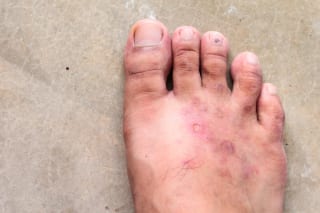
Psoriasis on feet: symptoms, treatment and daily careHow psoriasis shows up on the soles and toenails, how to tell it from athlete’s foot, which treatments work, and daily care that eases painful cracks.
-

Podiatry
How to relieve itchy feet at night: causes and remediesWhy your feet itch more at night, how to calm the itch tonight, the most common causes from athlete’s foot to dry skin, and when itchy feet need a doctor.
-
Podiatry
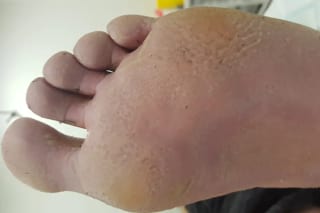
Pitted keratolysis: causes, treatment and home careWhat pitted keratolysis is, why it makes feet smell, whether it’s contagious, and how to treat it at home or with a doctor so it doesn’t come back.