
Health guide · Podiatry
Heel pain in the morning: causes, relief and when to see a doctor
Why your heel hurts with your first steps, the most common causes of heel pain, what helps at home and the signs it’s time to see a podiatrist.

The short answer
Heel pain that’s worst with your first steps in the morning is most often plantar fasciitis, an irritation of the thick band of tissue along the bottom of your foot. It tightens overnight, and those first steps stretch it suddenly. Stiffness and pain at the back of the heel is more likely Achilles tendinitis.
Most people get better with home care: supportive shoes, even around the house, calf and arch stretches before you get out of bed, ice after activity and an arch-supporting insert. See a podiatrist if the pain lasts more than two to three weeks or keeps you from walking normally. Get seen promptly if it follows an injury, or if your heel is red, hot and swollen.
Want it checked? Find an Evolve Health podiatrist near you
This guide is for general information and is not a diagnosis. Some services may not be offered at every office; your provider will go over your treatment options at your appointment.
Why does my heel hurt in the morning?
The plantar fascia is a thick band of tissue that runs from your heel bone to your toes and supports your arch. While you sleep, it rests in a shortened, relaxed position, and so do your calf muscles. When you stand up, your first steps stretch that tight tissue all at once, and it pulls where it attaches to the heel. That’s the sharp, stabbing pain near the inside of the heel that many people feel first thing in the morning.
The pain usually eases after a few minutes of walking, then comes back after you’ve been sitting for a while. That start-up pattern is the classic sign of plantar fasciitis, the most common cause of heel pain in adults.

Common causes of heel pain
Where your heel hurts, and when, points to the likely cause:
| Where it hurts | What it often feels like | Likely cause |
|---|---|---|
| Bottom of the heel, toward the inside | Sharp pain with first steps in the morning or after sitting | Plantar fasciitis |
| Back of the heel | Stiff and sore in the morning, worse with hills or running | Achilles tendinitis |
| Bump at the back of the heel | Rubs and hurts in shoes with a stiff back | Pump bump (Haglund’s deformity), bursitis |
| Bottom of the heel after a hard landing | Bruised, tender to press, worse on hard floors | Bruised heel |
| Whole heel | Deep ache that builds with impact, sometimes with swelling | Stress fracture of the heel bone |
| Inside of the heel and sole | Burning, tingling or numbness | Tarsal tunnel syndrome or another nerve problem |
| Back of the heel in a child aged 8 to 14 | Pain after sports, sometimes a limp | Sever’s disease (growth plate irritation) |
Plantar fasciitis and heel spurs
Plantar fasciitis is irritation and tiny strains in the plantar fascia where it attaches to the heel. It often starts after long hours on hard floors, walking barefoot at home, a jump in running or walking, or a change to flat, unsupportive shoes. Tight calves, flat feet, high arches and extra body weight all raise the risk.
A heel spur is a small bony growth where the fascia attaches. Many people have one with no pain at all, so the spur is usually a bystander. Treatment focuses on calming the tissue around it.
Achilles tendinitis
The Achilles tendon connects your calf muscles to the back of your heel. When it’s overloaded, for example by hills, speed work, a sudden increase in activity or tight calves, it becomes irritated. It feels stiff and sore at the back of the heel in the morning and often loosens up as you warm up. If you feel a sudden pop at the back of the heel with sharp pain, get seen promptly, as the tendon may have torn.
Pump bump and bursitis
A pump bump (Haglund’s deformity) is a bony bump at the back of the heel that rubs against stiff shoe backs. It can irritate the small fluid sac (bursa) nearby and the Achilles tendon where it attaches. Shoes with a soft or open back usually help.
Stress fracture
A stress fracture is a small crack in the heel bone from repeated impact, often after a sudden increase in walking or running or a switch to harder surfaces. It causes a deep ache that gets worse with activity. X-rays can look normal at first, so your podiatrist may order an MRI if the story fits.
Other causes
- Nerve problems such as tarsal tunnel syndrome cause burning, tingling or numbness rather than start-up pain.
- Sever’s disease is the most common cause of heel pain in active children and usually settles with rest from running and jumping.
- Arthritis, including inflammatory types, can cause heel pain along with morning stiffness in other joints.
Relief at home: what to try first
Most heel pain gets better with simple, consistent home care. The key is doing it every day for several weeks.
Before you get out of bed
- Pull your toes back toward your shin and hold for 30 seconds. Repeat three times.
- Do 10 slow ankle circles in each direction.
- Put on supportive shoes or sandals before you take your first steps. Don’t walk barefoot on hard floors.
Daily stretches
Do these twice a day, holding each stretch for 30 to 60 seconds, three times:
- Calf stretch, straight knee: stand facing a wall, one foot back, heel down and knee straight, and lean forward.
- Calf stretch, bent knee: same position, but bend the back knee slightly to reach the lower calf.
- Plantar fascia stretch: sit, cross your foot over your knee and pull your toes back until you feel a stretch in your arch.
- Frozen bottle roll: roll your arch over a frozen water bottle for 5 minutes. It stretches and cools at the same time.
- Towel curls: once the pain settles, scrunch a towel toward you with your toes to strengthen the small foot muscles.

Shoes and inserts
- Wear supportive shoes with a firm heel and good arch support, even at home.
- Avoid flat flip-flops, worn-out sneakers and high heels while your heel is sore.
- Try an over-the-counter arch support or heel cup. Our guide to the best shoes for plantar fasciitis has specific advice.
- Replace running shoes every 300 to 500 miles.
Ice and pain relief
Ice your heel for 10 to 15 minutes after activity, with a cloth between the ice and your skin. An over-the-counter pain reliever can help for a short time if it’s safe for you, but it won’t fix the problem on its own.
Night splints
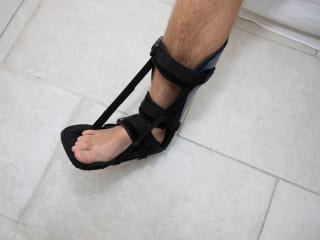
A night splint holds your foot gently flexed while you sleep, so the plantar fascia doesn’t tighten overnight. Many people notice less morning pain within a week or two. See our guide to night splints for plantar fasciitis.
Ease the load
- Cut back on running and jumping for a few weeks. Swimming and cycling keep you fit with less impact.
- Build activity back up slowly.
- Take breaks from long periods of standing, and use a cushioned mat if you stand at work.
- If you carry extra weight, losing some takes pressure off your heels.
Walking on the beach
Barefoot walks on soft sand make your calf, Achilles tendon and plantar fascia work much harder, and there’s no arch support. While your heel is sore, keep beach walks short, stick to firm, wet sand near the water, and wear supportive sandals.
A two-week starter plan
- Days 1 to 3: supportive shoes all the time, even at home. Ice after activity. Stretch twice a day.
- Days 4 to 10: add an arch-supporting insert and simple foot strengthening. Use a night splint if first-step pain is strong.
- Days 11 to 14: increase walking time gradually. If you’re improving, keep going. If not, book a visit.
How long does heel pain take to go away?
Many people feel better within 6 to 12 weeks of consistent home care. Some take several months, and a small number take a year or longer. Starting early and sticking with stretches and supportive shoes makes the biggest difference. Our guide can plantar fasciitis go away on its own? explains what to expect.
When to see a doctor for heel pain
Get seen promptly if:
- you can’t put weight on your foot or walk normally
- the pain started with an injury, or you felt a pop at the back of your heel
- your heel is red, hot and swollen, or you have a fever
- you have new numbness or tingling in your heel or foot
- you have diabetes and heel pain, a sore or a color change
Book a visit with a podiatrist if:
- the pain lasts more than two to three weeks despite home care
- it keeps getting worse, or hurts even at rest or at night
- it’s changing the way you walk, or your knees or hips have started to hurt
- your child has heel pain that makes them limp
What a podiatrist can do for heel pain
Your podiatrist will ask where and when it hurts, examine your foot and watch how you walk. One simple test, pulling your big toe back to stretch the plantar fascia, often reproduces plantar fasciitis pain. Evolve Health podiatrists have digital X-ray on site for fractures, spurs and arthritis, and may order an ultrasound or MRI if needed.

If home care hasn’t been enough, treatment may include:
- Custom orthotics made from a scan or mold of your feet, to support the arch and take pressure off the heel
- Physical therapy to stretch and strengthen the calf, plantar fascia and foot muscles, and to retrain how you walk
- Night splints or a short time in a walking boot to calm a bad flare
- A steroid injection for short-term relief, used carefully
- Shockwave therapy for heel pain that has lasted months
- Surgery, rarely, and only after a full non-surgical plan: releasing part of the plantar fascia, or lengthening a very tight calf muscle

Learn more about how we treat plantar fasciitis and heel pain. You can find a podiatrist near you and book online, and check which insurance plans we accept before your visit.
Keeping heel pain from coming back
- Keep stretching your calves and arches a few times a week, even after the pain is gone.
- Build up any new activity gradually.
- Rotate two pairs of supportive shoes, and replace them before the support wears out.
- Wear supportive shoes or slippers at home rather than going barefoot on hard floors.
- Use inserts on days you’ll be standing for a long time.
- Mix softer surfaces into your walks and runs.
Questions, answered
Overnight, the plantar fascia and calf muscles rest in a shortened position. Your first steps stretch them suddenly, which causes a sharp pain under the heel. It usually eases after a few minutes of walking and comes back after sitting. This pattern is the classic sign of plantar fasciitis.
Before you get out of bed, pull your toes back toward your shin for 30 seconds, three times, and do a few ankle circles. Put on supportive shoes or sandals right away instead of walking barefoot. Rolling your foot over a frozen water bottle for a few minutes and using a night splint can also help.
Many people feel better within 6 to 12 weeks of daily stretching, supportive shoes and inserts. Some take several months, and a small number need up to a year or more. If you’re not improving after a few weeks of consistent home care, a podiatrist can add treatments that speed things up.
See a podiatrist if heel pain lasts more than two to three weeks despite home care, keeps getting worse or is changing how you walk. Get seen promptly if it follows an injury or a pop at the back of the heel, if you can’t put weight on your foot, if the heel is red, hot and swollen, or if you have numbness, tingling or diabetes.
Usually not at first. A podiatrist can often diagnose plantar fasciitis from your symptoms and an exam. An X-ray helps if a stress fracture, arthritis or a bone problem is possible, or if pain isn’t improving. Ultrasound or MRI is sometimes used for tendons and soft tissue.
Probably not on its own. Many people have heel spurs on X-ray with no pain at all. The pain usually comes from the irritated tissue around the spur, so treatment focuses on the plantar fascia and calf, not removing the spur.
It can. Soft sand makes your calf, Achilles tendon and plantar fascia work harder with every step, and walking barefoot takes away arch support. Long beach walks can flare plantar fasciitis or Achilles tendinitis. Walk on firmer, wet sand near the water, keep walks shorter while your heel is sore, and wear supportive sandals or shoes.
In active children aged about 8 to 14, heel pain is often Sever’s disease, an irritation of the growth plate at the back of the heel. It usually settles with rest from running and jumping, stretching, heel cups and supportive shoes. See a podiatrist if your child limps or the pain doesn’t improve.
This guide is for general education and doesn’t replace advice from your own doctor. Everyone’s situation is different, so talk to a healthcare provider about symptoms that are new, getting worse or worrying you. If you think you may have a medical emergency, call 911. Reading this guide doesn’t make you a patient of Evolve Health.
Want a specialist to take a look?
A guide can explain, but it can’t examine you. Evolve Health providers see patients across Florida and Texas, and you can book online any time.
More guides like this
-
PodiatryPhysical therapy
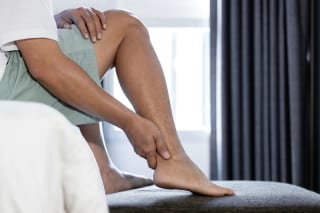
Achilles tendinitis: symptoms, treatment and how long it takes to healWhat Achilles tendinitis feels like, insertional vs mid-tendon pain, the exercises that help most, how long healing takes and the warning signs of a tear.
-

Podiatry
Can plantar fasciitis go away on its own? How long it lastsWhether plantar fasciitis heals by itself, how long it usually lasts, what speeds up recovery and the signs it’s time to see a podiatrist.
-
Podiatry
Night splints for plantar fasciitis: do they work?Do night splints work for plantar fasciitis? What a night splint does, who it helps most, how to wear one and who should check with a podiatrist first.