
Health guide · Podiatry
Recommended podiatry products: how to choose what your feet need
How to choose shoes, insoles, heel and Achilles supports, braces, toe products and foot creams for common foot problems, and when to see a podiatrist.

The short answer
Choose foot care products by the problem you have, not the ads. For most common problems the simple things help most: supportive shoes that fit, an over-the-counter arch support, a calf stretcher or heel lift for heel and Achilles pain, a urea cream for cracked heels, and a lace-up brace after an ankle sprain. Give a product 2 to 4 weeks before you judge it. Most ease symptoms rather than fix the cause.
If you have diabetes, numb feet or poor circulation, check with a podiatrist before using callus removers, acid-based creams, toe separators or anything tight. They can cause sores you may not feel.
Want it checked? Find an Evolve Health podiatrist near you
This guide is for general information and is not a diagnosis. Some services may not be offered at every office; your provider will go over your treatment options at your appointment.
How to use this guide
Walk down any pharmacy aisle and you’ll find dozens of insoles, pads, braces and creams. This guide explains what each type of product does, who it helps and what to watch out for, so you can pick the right one for your problem.
Our recommended products page lists the specific items Evolve Health providers often suggest, with links to buy. Some links in this guide go to Amazon too. As an Amazon Associate, Evolve Health earns from qualifying purchases; you pay the same price either way.
A few rules of thumb:
- Match the product to the problem. A heel lift helps Achilles pain but does nothing for a bunion.
- Give it time. Most products need 2 to 4 weeks of steady use before you can tell if they help.
- Products ease symptoms. They rarely fix the cause, so pain that lasts or keeps coming back needs a diagnosis.
- Take extra care with diabetes, numb feet or poor circulation. Anything that rubs, squeezes, burns or peels skin can cause a sore you may not feel.
Match the product to the problem
| Problem | Products that can help | Keep in mind |
|---|---|---|
| Heel pain with your first steps (plantar fasciitis) | Supportive shoes, an arch support, a calf stretcher, a night splint | Daily stretching and good shoes matter most |
| Pain at the back of the heel (Achilles) | A heel lift, a gel heel sleeve, shoes with a slightly raised heel | Calf-strengthening exercises are the main treatment |
| A sprained ankle, or an ankle that keeps rolling | A lace-up or stirrup-style brace | Pair it with balance and strength exercises |
| Bunion rubbing | A gel bunion guard, a toe spacer, split-toe bunion socks | They ease pressure. They don’t straighten the toe. |
| A toe that curls, buckles or crosses over (hammertoe) | A toe splint or crest pad, a roomy toe box | Helps only toes that still straighten by hand |
| A stiff, painful big toe joint | Stiff-soled or rocker-sole shoes, a carbon fiber insert | Limits bending at the sore joint |
| Dry, cracked heels and calluses | Urea cream, a foot file | Never cut calluses yourself |
| Athlete’s foot | An antifungal cream | Use it for the full time on the label |
| Swollen feet and ankles | Compression socks | Check first if you have poor circulation |
| Arthritis aches in the foot or ankle | An anti-inflammatory gel, cushioned shoes | Check the gel is safe for you |
Shoes: start here
The right shoes do more for most foot problems than any other product. Look for:
- a firm heel counter, the back of the shoe that cups your heel. It shouldn’t fold when you squeeze it.
- a sole that bends at the ball of the foot, not in the middle
- a shoe that doesn’t twist easily when you wring it
- a roomy toe box, with about a thumb’s width between your longest toe and the end of the shoe
- a removable insole, so you can add an arch support or orthotic
- a slightly raised heel if you have heel or Achilles pain
Shop later in the day, when your feet are at their largest, and fit the shoe to your bigger foot. Replace running shoes every 300 to 500 miles, and walking shoes once the heel feels soft or the sole is worn unevenly.
Brands that make a wide range of supportive walking and running shoes, including wide widths, include New Balance, ASICS and Brooks. The best model depends on your foot, so try shoes on and walk in them before you commit. Around the house, a cushioned recovery sandal such as OOFOS is kinder to sore heels than walking barefoot on hard floors.
For specific models and what to look for with heel pain, see the best shoes for plantar fasciitis.

Insoles and arch supports
- Semi-rigid arch supports have a firm shell under the arch. They suit plantar fasciitis, flat feet that ache and tired feet after long days of standing, and they often help more than soft gel insoles.
- Cushioned insoles of foam or gel add comfort and shock absorption, which helps thinning heel pads and sore feet on hard floors, but they give little support.
- Carbon fiber inserts are thin, stiff plates that stop the shoe from bending. They’re used for a stiff or painful big toe joint (hallux rigidus), turf toe and some forefoot injuries, not for arch support. An example is the RTP Carbon Fiber Insert. Check with your podiatrist before using one for an injury.
Break in any new insert gradually: an hour or two on the first day, adding an hour or two each day. Replace store-bought inserts when the arch flattens or the cover wears through, often after 6 to 12 months of daily use.
For plantar fasciitis, studies often find that a good store-bought arch support works about as well as a custom orthotic, so it’s a sensible first step. Custom orthotics make sense when store-bought inserts haven’t helped, or if you have diabetes, arthritis or an unusual foot shape. Our guide do I need orthotics? explains the difference.

Heel and Achilles products
- Calf stretcher or foot rocker. A rocker such as the ProStretch calf stretcher makes it easy to stretch your calf and the bottom of your foot every day, which helps plantar fasciitis and tight calves. If your pain is where the Achilles tendon attaches to the heel, avoid stretches that drop your heel below your toes.
- Heel lift. A small wedge under the heel, such as the PowerStep adjustable heel lift, reduces the stretch on the Achilles tendon with each step. Use one in both shoes so you stay level.
- Gel heel sleeve. A sleeve with a gel pad over the back of the heel, such as the PediFix Visco-gel Achilles sleeve, stops shoe backs rubbing on a sore Achilles or a bony bump at the back of the heel.
- Heel and arch wrap. The Aircast AirHeel wraps the heel and arch with small air cushions. Some people with plantar fasciitis find it comfortable, but there’s little research on wraps like this.
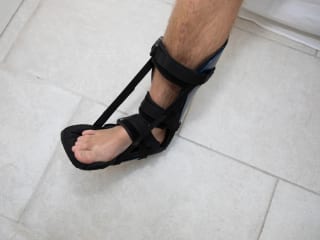
- Night splint. A night splint holds your foot flexed up while you sleep. It helps some people with the sharp pain of their first steps in the morning, but the studies are mixed. See do night splints work? before you buy one.
These products support the main treatments: daily stretching for plantar fasciitis, and calf-strengthening exercises for the Achilles. See our guide to Achilles tendinitis for the exercises.
Ankle braces
For most ankle sprains, a lace-up or stirrup-style brace gives the best mix of support and comfort, and fits in a normal shoe. The Aircast AirSport is a semi-rigid brace with side shells and air cushions. Wear a brace during the day and for sport while the ligament heals, along with balance and strength exercises. If you can’t take 4 steps after an injury, get an X-ray before choosing a brace. Our guide to choosing an ankle brace compares the types by sprain grade.
Toe and bunion products
These products ease rubbing and pressure while you wear them. None of them straighten a bunion or a hammertoe for good. Shoes with a wide, deep toe box help most.
- Toe separators cushion between toes that rub and cause soft corns, such as these 3-layer foam toe separators.
- Bunion guards cover the bump with a gel pad, and some add a spacer between the big toe and second toe, like this bunion guard and toe spreader.
- Bunion socks have a split toe and padding over the joint, such as bunion relief socks.
- Hammertoe splints hold a buckled toe flatter. A Budin toe splint is a padded strap under the ball of the foot with a loop over the toe. It only helps toes that still straighten when you push them by hand.
If you have diabetes or numb feet, check your toes every day when you use any of these, because they can rub without you feeling it. If a bunion or hammertoe keeps hurting, a podiatrist can talk you through treatment options.

Creams and gels
For cracked heels and calluses
Urea softens thick, dry skin and helps it hold moisture:
- 10 to 25% urea suits daily use on dry, rough skin. A gentler cream with salicylic acid, such as CeraVe SA Cream, also works for rough skin.
- 40% urea is strong. It’s for thick calluses and heavily cracked heels, such as Urea 40 with salicylic acid. Use it on the thick skin only, not on open or bleeding cracks, and stop if it stings, burns or turns the skin red.
Apply at night after a shower and put on cotton socks. Once or twice a week, gently smooth thick skin with a foot file or pumice stone. Don’t cut calluses or corns with a blade. If you have diabetes, numb feet or poor circulation, ask a podiatrist before using any product with salicylic acid, and have deep or bleeding cracks checked.
For joint and tendon aches
Diclofenac gel, such as Voltaren arthritis pain gel, is an anti-inflammatory you rub into the painful area. It’s approved for arthritis pain in joints including the feet and ankles. Less of the medicine reaches your bloodstream than with pills, but it isn’t right for everyone. Follow the label, and don’t use it for more than 21 days without talking to a doctor. Check with your doctor first if you have kidney disease, heart disease, stomach ulcers or an allergy to anti-inflammatory medicines, take a blood thinner or another anti-inflammatory, or are pregnant.
For athlete’s foot
Antifungal creams such as terbinafine and clotrimazole treat athlete’s foot. They work best when you keep using them for the full time on the label, even after the itch stops. Our guide to choosing the best athlete’s foot cream compares the options.

Compression socks
Compression socks help swollen feet and ankles and tired, heavy legs. For everyday swelling, most people start with 15 to 20 mmHg. They aren’t safe for everyone, so read our guide to choosing compression socks first, especially if you have diabetes or poor circulation.
Products to skip or use with care
- Medicated corn pads and callus removers. Their acids can burn healthy skin. People with diabetes, numb feet or poor circulation shouldn’t use them. See our guide to diabetic foot care for safer options.
- Heating pads, heated massagers and hot soaks on numb feet. You may not feel a burn.
- Magnetic insoles and copper-infused products. There’s no good evidence that magnets or copper help foot pain.
- “Detox” foot pads and foot baths. They don’t draw toxins out of your body. The color change comes from moisture, salt or metal from the device, not from you.
- Bunion correctors sold to straighten your toe. They may ease pain while worn, but they can’t reverse a bunion.
- Anything that promises to cure all foot pain. Different problems need different treatment.
When to see a podiatrist instead
Get seen the same day if:
- you can’t put weight on your foot after an injury, or it looks deformed
- your foot is red, hot and swollen, or you have a fever
- you have diabetes and notice a new sore, blister or color change
Go to the emergency room if your foot or toes suddenly turn cold, pale or blue.
Book a visit if:
- pain lasts more than 2 to 3 weeks despite the right product
- it keeps coming back, or changes the way you walk
- you have burning, tingling or numbness
- you have thick nails, corns or calluses you can’t safely care for yourself
Bring the shoes you wear most, and any inserts or braces you’ve tried, to your appointment. A podiatrist can find the cause, tell you which products are worth using, and treat what products can’t. You can find a podiatrist near you and book online.
Questions, answered
The products podiatrists suggest most often are supportive shoes, over-the-counter arch supports, a calf stretcher or heel lift for heel and Achilles pain, a lace-up ankle brace after a sprain, pads and spacers for toes that rub, and urea cream for cracked heels. The right one depends on your problem. If pain lasts more than a few weeks, see a podiatrist rather than trying product after product.
Often, for common problems. For plantar fasciitis, studies often find a good prefabricated arch support works about as well as a custom orthotic, so it’s a sensible first step. Custom orthotics are worth considering if store-bought inserts don’t help, or if you have diabetes, arthritis, a foot deformity or pressure sores.
A urea cream is usually the best choice. Around 10 to 25% urea suits daily use on dry, rough skin, and 40% urea softens thick calluses. Apply it at night after a shower, and wear cotton socks over it. If you have diabetes, or the cracks are deep, bleeding or painful, see a podiatrist.
No. Toe separators, bunion guards and bunion socks can ease rubbing and pressure while you wear them, but they don’t straighten the big toe or stop a bunion from progressing. Shoes with a wide toe box help most. If a bunion keeps hurting or makes shoes hard to wear, see a podiatrist.
They help some people, mainly with the sharp pain of the first steps in the morning. The studies are mixed: some found a clear benefit, while others found no extra gain over stretching and good shoes. A night splint is worth trying for 1 to 3 months if morning pain is your main problem.
For most adults, yes, when used as the label directs. Diclofenac gel is approved for arthritis pain in joints including the feet and ankles, and less of it reaches the bloodstream than with pills. Check with your doctor first if you have kidney disease, heart disease, stomach ulcers or an allergy to anti-inflammatory medicines, take a blood thinner, or are pregnant.
No, not without your podiatrist’s advice. Medicated corn pads and callus liquids contain acids that can burn healthy skin and cause wounds, and with numb feet or poor circulation you may not notice until an ulcer forms. A podiatrist can safely trim corns and calluses and find what’s causing them.
Replace over-the-counter insoles when the arch flattens or the cover wears through, often after 6 to 12 months of daily use. Custom orthotics usually last 2 to 5 years. Replace running shoes every 300 to 500 miles, and walking shoes when the heel feels soft or the sole is worn unevenly.
Many foot care products, braces, insoles and mobility aids are eligible expenses under health savings and flexible spending accounts, and some need a letter of medical necessity from your provider. The rules vary by plan, so check with your plan administrator before you buy.
This guide is for general education and doesn’t replace advice from your own doctor. Everyone’s situation is different, so talk to a healthcare provider about symptoms that are new, getting worse or worrying you. If you think you may have a medical emergency, call 911. Reading this guide doesn’t make you a patient of Evolve Health.
Some product links in this guide go to Amazon. As an Amazon Associate, Evolve Health earns from qualifying purchases; you pay the same price.
Want a specialist to take a look?
A guide can explain, but it can’t examine you. Evolve Health providers see patients across Florida and Texas, and you can book online any time.
More guides like this
-

PodiatryPhysical therapy
Ankle brace for a sprain: which type you need and for how longCompression sleeves, lace-up, stirrup and hinged braces and walking boots compared by sprain grade, plus how long to wear one and how to fit it.
-
Podiatry
Night splints for plantar fasciitis: do they work?Do night splints work for plantar fasciitis? What a night splint does, who it helps most, how to wear one and who should check with a podiatrist first.
-
PodiatryNephrology
Compression socks for swelling and foot pain: choosing the right pairHow to choose compression socks for swollen feet and legs: which strength, size and length, how to put them on, and which kinds of foot pain they help.