What Is a Sports Therapist and Sports Physical Therapy?
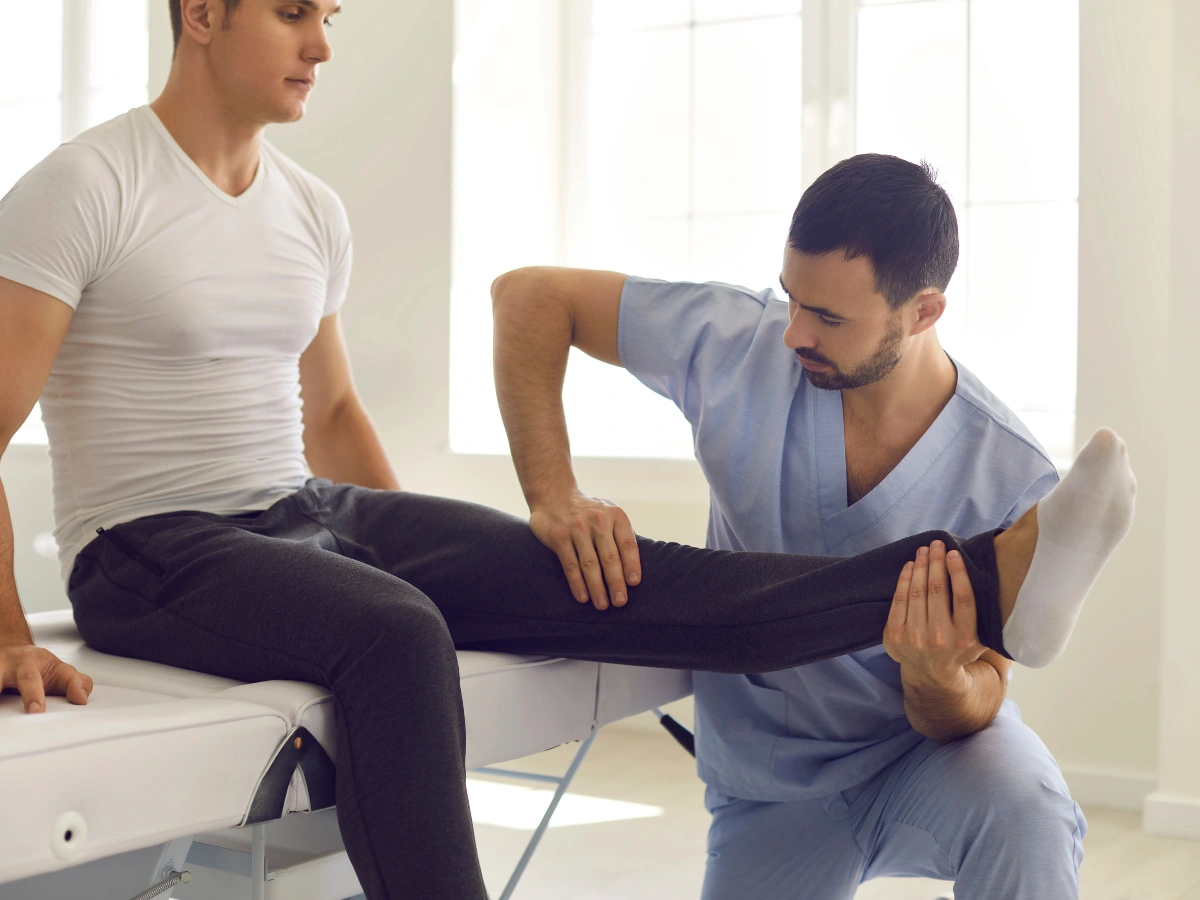
A sports therapist—or sports physical therapist—is a licensed professional who specializes in assessing movement, load tolerance, and the specific demands of athletic activity. Unlike clinicians who treat a broad range of general conditions, a sports therapist zeros in on the musculoskeletal challenges that active people face, from acute injuries to chronic overuse problems.
The scope of practice for a physical therapist in sports settings includes diagnosing musculoskeletal problems, delivering manual therapy interventions, specialized techniques such as dry needling, prescribing targeted exercises, and building comprehensive return-to-sport plans. This means you get a clinician who understands not just how to reduce pain, but how to get you running strong again.
You’ll find sports therapists working in outpatient clinics, providing on-field coverage at local races, and collaborating with podiatrists for complex foot and ankle issues like plantar fasciitis, Achilles tendinitis, or problematic toenails that alter gait. Most hold a Doctor of Physical Therapy degree and may have completed sports residencies or earned board certification in sports physical therapy.
Core skills of a sports therapist:
Gait analysis using video and biomechanical assessment tools
Strength and load tolerance testing specific to running demands
Sport-specific rehabilitation progressions (walk-run intervals, tempo builds)
Manual therapy techniques for muscles, joints, and soft tissues
Load management strategies that balance training with recovery
Rehabilitation in sports therapy guides recovery from injuries such as sprains, ligament tears, and post-surgical issues.
Psychological support is also an important aspect of sports therapy, helping athletes overcome mental barriers during injury recovery.
Runner-Specific Issues We Treat in Palm Harbor
Runners make up a significant portion of our patient population, and for good reason. The repetitive nature of running combined with Florida’s heat, humidity, and varied surfaces creates a perfect storm for certain injuries.
Sports injuries, including common foot injuries, are frequently seen in runners and require specialized understanding for effective treatment and prevention. Palm Harbor trail runners, in particular, face unique challenges from uneven terrain and the added strain of outdoor training in warm conditions.
Whether you’re recovering from a flare-up or trying to prevent future injuries before they start, understanding common running injuries helps you recognize warning signs early.
Conditions we commonly address:
Shin splints (medial tibial stress syndrome); often triggered by rapid mileage increases, hard surfaces, or inadequate calf strength, causing pain along the inner border of the lower leg
Plantar fasciitis and heel pain; linked to poor calf flexibility, weak foot intrinsics, and mechanics issues at the heel bone and arch
Achilles tendinopathy and calf strains; frequently caused by speed work, hill training, or sudden increases in intensity that overload the posterior chain
Stress reactions and stress fractures; resulting from under-recovery, low bone loading tolerance, and training errors that put excessive stress on bones
Knee pain (patellofemoral pain, runner’s knee, IT band irritation); often related to hip weakness, poor running mechanics, and inadequate single-leg stability
Sports injuries and foot injuries are common causes of pain for athletes and active individuals. For mild sports injuries, the standard immediate response is the R.I.C.E. protocol—Rest, Ice, Compression, and Elevation—which helps manage symptoms and promote recovery in the early stages.
We screen for contributing foot problems that many runners overlook. For example, an ingrown toenail can subtly alter your push-off pattern and increase stress on your shin and knee. If nail pain is changing your gait, we recommend ingrown toenail treatment from a podiatrist to address the root cause.
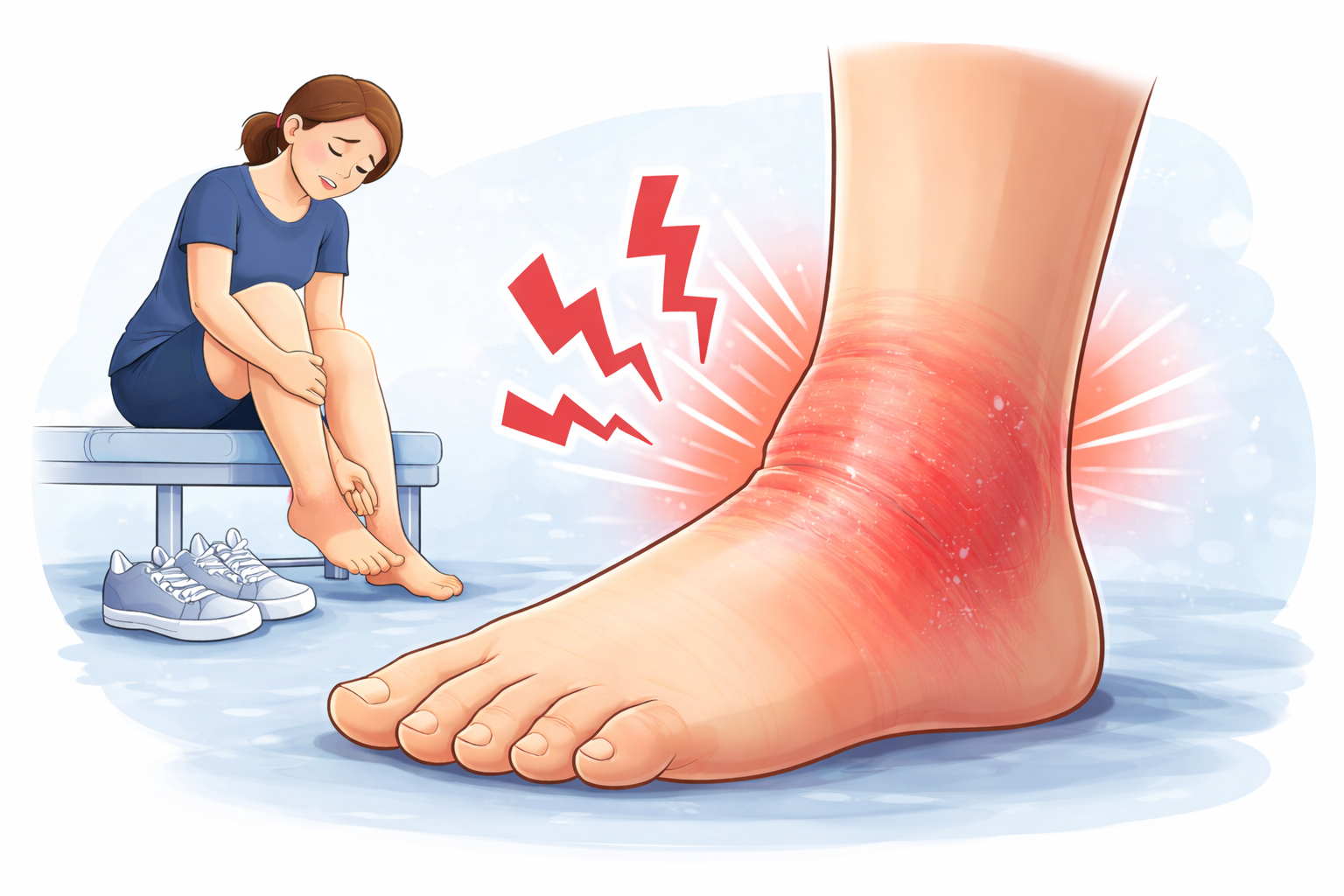
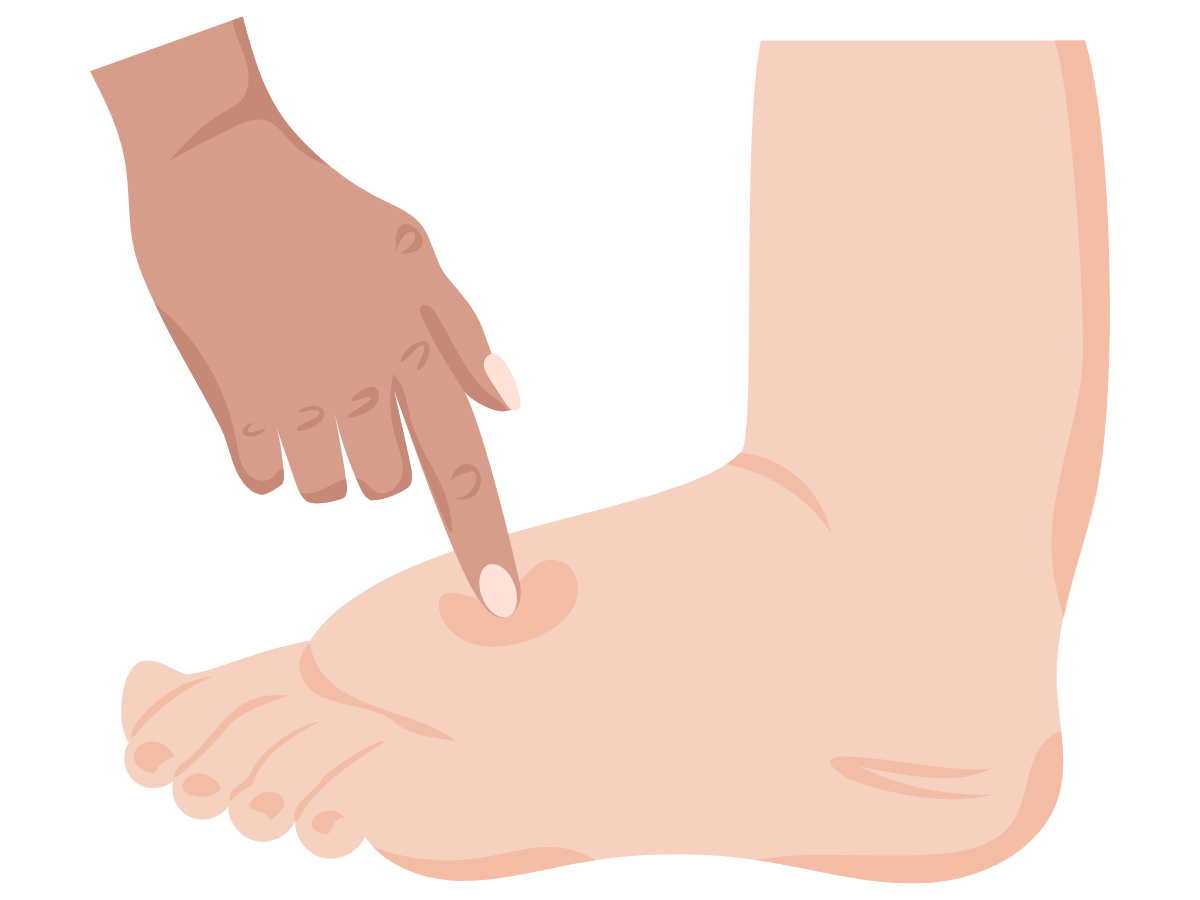
For runners experiencing post-run swelling in the feet and legs, we also advise on socks for swelling and foot pain as part of a recovery strategy.
Shin Splints: Causes, Symptoms, and When to See a PT
Shin splints—technically called medial tibial stress syndrome—show up as pain along the inner border of your tibia during or after running. It’s one of the most common running injuries, affecting roughly 10-15% of runners annually, and it can become debilitating if ignored.
What Causes Shin Splints in Palm Harbor Runners
The causes tend to follow predictable patterns. A sudden jump in weekly mileage is the classic trigger—your body simply hasn’t adapted to the new training load. Running on concrete seawalls and hard sidewalks (common in Palm Harbor) increases impact forces. Worn-out shoes lose their shock absorption. And limited calf strength or ankle mobility leaves your shin bones absorbing forces that muscles should handle.
Ground reaction forces during running can reach 2-3 times your body weight. Without adequate strength and conditioning, those forces accumulate as tissue stress rather than productive training stimulus.
Hallmark Symptoms to Watch For
Aching or sharp pain at the start of a run that may ease slightly after warm-up
Tenderness when pressing along the inner shin bone
Pain that worsens after the run or the following morning
Tight calves and restricted ankle motion
Discomfort that initially responds to rest but returns with training
When to Seek Sports Physical Therapy Palm Harbor
You don’t need to wait until you can’t walk to seek help. Consider booking an evaluation if:
Pain persists more than 1-2 weeks despite rest and self-care
Pain concentrates on one specific spot (a red flag for stress fractures)
You’re limping, experiencing night pain, or noticing swelling
Symptoms are affecting your running goals and training consistency
It’s also worth noting that toe pain can subtly change your foot strike and overload your shin. If you’re dealing with nail issues alongside shin pain, check why ingrown toenails should be checked by a Podiatrist to understand how foot health connects to your entire kinetic chain.
Sports PT Routines for Strength and Flexibility
Effective shin splint management—and preventing injuries in general—requires more than just rest. The research is clear: combining strengthening exercises, mobility work, and progressive loading yields far better outcomes than passive recovery alone.
Calf and Shin Strength Routine
Building capacity in your lower leg muscles is essential for runners. These targeted exercises address the primary tissues involved in shin splints:
Double-leg calf raises on flat ground, progressing to single-leg as strength improves
Step calf raises emphasizing the eccentric (lowering) phase—3 sets of 15 reps with controlled 3-second descents
Tibialis anterior raises (toe lifts against a wall or with resistance bands) to strengthen the front of the shin
Isometric calf holds at 20-30% max effort for 5-10 seconds, 3-5 sets, useful during acute phases when motion is painful
Hip and Core Strength for Runners
Hip weakness is a hidden driver of many lower leg issues. When your hips can’t control your pelvis and femur, your shin and knee absorb compensatory stress.
Side-lying hip abduction and band walks to build lateral hip strength
Single-leg bridges and step-downs targeting glute activation and control
Anti-rotation core exercises like pallof presses and dead bugs to stabilize your trunk during running
Flexibility and Mobility Work
Tight muscles restrict motion and alter mechanics. Incorporate exercises for restoring function:
Calf and soleus stretching after runs, holding 30-60 seconds per side
Ankle dorsiflexion drills based on the knee-to-wall test to improve range
Gentle hamstring and hip flexor stretches to normalize stride length
Palm Harbor sports specialists tailor sets, reps, and progression based on your specific terrain—training for bridge runs versus softer Palm Harbor trail paths requires different loading strategies. For runners dealing with swelling, we often integrate compression options from our socks for swelling and foot pain guide as part of the recovery routine.

Gait Analysis and Running Form Coaching
Running mechanics matter. Two runners with identical training volumes can have vastly different injury rates based on how they move. Sports therapy includes video-based gait analysis to identify form issues contributing to shin splints, knee pain, plantar fasciitis, and other common conditions. Targeted interventions such as physical therapy, gait retraining, and strength training are then used to optimize running performance by improving biomechanics and movement efficiency.
Incorporating physical therapy into your training regimen can optimize your running performance and make achieving personal records more attainable.
What Happens During a Gait Analysis Session
A typical session involves recording your running on a treadmill—and sometimes on outdoor surfaces similar—to capture your natural patterns. Your therapist analyzes:
Cadence (steps per minute) and stride length
Foot strike pattern (heel, midfoot, or forefoot)
Trunk position and hip mechanics through the gait cycle
Asymmetries between left and right sides
After initial recording, you receive targeted cues and drills. Then we compare slow-motion footage before and after to show changes in real time.
Form Changes That Reduce Shin Stress
Small adjustments can yield significant results. Research shows that correcting overstriding—where your foot lands too far in front of your body—can reduce shin stress by 15-20%. Key changes include:
Slightly higher cadence (often 5-10% increase from baseline)
Softer, quieter landings with less aggressive heel strike
Reduced overstriding by landing closer to your center of mass
Improved hip control to prevent excessive leg rotation
The goal isn’t to overhaul your entire running form overnight. We help you incorporate exercises and cues gradually, allowing your body to adapt without creating new problems.
Recovery, Load Management, and Return-to-Running Plans
Load management sits at the heart of sports physical therapy Palm Harbor. This is especially critical during Florida’s hot, humid months when fatigue accumulates faster and recovery takes longer.
Building a Safe Return-to-Running Plan
Returning too quickly is one of the biggest mistakes runners make. A structured progression protects healing tissues while maintaining your fitness:
Pre-running benchmarks: Pain-free walking and single-leg hopping before any running
Walk-run intervals: Starting with something like 1 minute run / 2 minutes walk, scaled over 4-6 weeks
Weekly mileage caps: Increases limited to roughly 5-10% depending on injury history and symptoms
Surface and terrain considerations: Softer surfaces initially, adding roads and hills progressively
The Role of Cross-Training
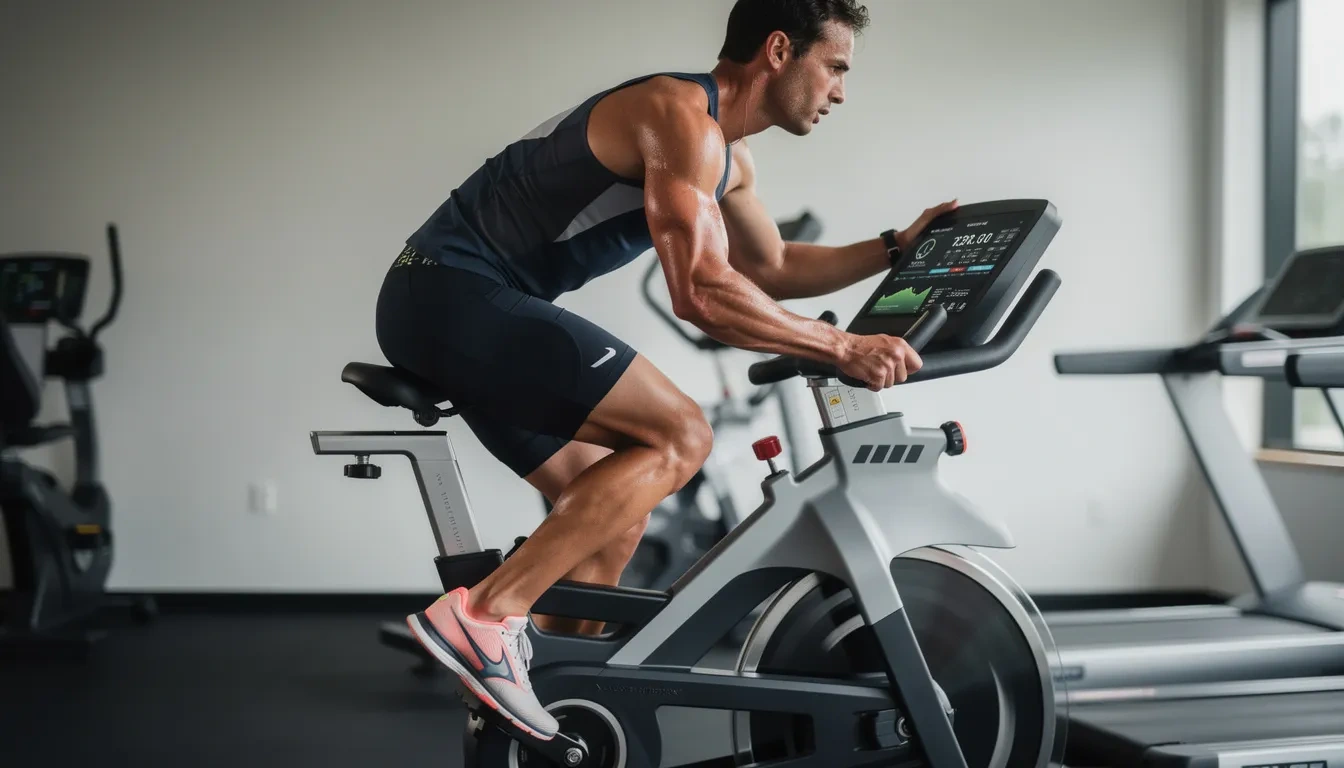
Non-impact options like cycling, pool running, and elliptical work help maintain cardiovascular fitness while tissues heal. This keeps you active without putting repetitive stress on recovering structures.
Our clinicians also counsel on footwear choices, surface selection, and supportive tools like compression socks for swelling and foot pain. Recovery isn’t just about what you do in the clinic—it’s about optimizing everything between sessions.
Foot and Ankle Care: Working With Podiatrists
Runners with recurrent shin splints, plantar fasciitis, or persistent toe pain often benefit from coordinated care between sports physical therapy and podiatry. The foot is the foundation of your running mechanics, and problems there ripple upward.
Untreated nail pain, for example, changes how you push off the ground. This altered pattern can overload your shin, stress your knee, and even affect your hip. Getting ingrown toenail treatment from a podiatrist early prevents these compensatory patterns from becoming chronic issues.
When podiatry referral or co-management is appropriate:
Persistent heel bone pain that doesn’t respond to stretching and strengthening
Recurring ingrown toenails or nail infections.
Suspected stress fractures in foot bones requiring imaging and medical management
Chronic ankle sprains with instability affecting running confidence
Need for custom orthotics to address structural foot issues
Why Choose Our Palm Harbor Sports Specialists
We’re part of a wider Evolve Health network that proudly serves in Texas and Florida, bringing specialized sports care to communities that need it. Our focuses specifically on the needs of local runners and active adults.
What sets our Palm Harbor sports specialists apart:
Direct experience working with runners training for local 5Ks, half-marathons, and trail events
One-on-one sessions lasting 45-60 minutes, focusing on both pain relief and athletic performance
Evidence-based protocols for shin splints, Achilles injuries, plantar fasciitis, and other running-related conditions
Comprehensive evaluation that looks at the whole body, not just the painful area
We coordinate with podiatry, footwear specialists, and imaging centers when needed, so your care stays streamlined. No bouncing between providers who don’t communicate.

Evolve Health Sports Therapy and Treatment for Runners
Evolve Health proudly offers expert podiatry and physical therapy services across Texas and Florida, delivering some of the best treatment options for foot, ankle, and sports-related conditions. Our clinics are designed to support active individuals and runners alike, providing personalized care tailored to your unique needs.
At our Palm Harbor location, runners benefit from specialized sports therapy combined with expert podiatry, ensuring comprehensive treatment for issues like shin splints, ankle injuries, and persistent foot pain. Whether you’re training on local trails, roads, or bridges, our team understands the demands of your environment and works with you to keep you moving strong.
With multiple convenient locations throughout Texas and Florida, Evolve Health is committed to delivering high-quality, coordinated care that helps you recover faster, prevent future injuries, and optimize your athletic performance.
FAQs
How is sports physical therapy in Palm Harbor different from general PT for runners?
Sports physical therapy places a heavier emphasis on running mechanics, performance metrics, return-to-race timelines, and sport-specific loading progressions. General PT might focus on restoring basic function—walking without pain, for example—but sports PT pushes further. We address tempo runs, hill repeats, race-day readiness, and the specific demands of your training plan.
How long does it take to recover from shin splints with sports therapy?
Recovery timelines depend on severity and how long symptoms have been present. Mild cases caught early often improve within 3-4 weeks with load modification, targeted exercises, and gait adjustments. More established cases—especially those that have lingered for months—may need 6-10 weeks or longer.
Do I have to stop running completely if I have shin splints?
Not necessarily. Complete rest isn’t always required, and for many runners, it can actually slow recovery by decondioning the tissues that need to adapt. If pain stays low (typically below 3-4 on a 10-point scale) and doesn’t worsen after runs, modified training is often possible.
Can poor toenail or foot health really affect my shins and knees?
Yes, and this connection surprises many runners. Ingrown or painful toenails change how you push off the ground, altering your entire gait pattern. This compensation increases load on your shin, stresses your knee, and can even affect your hip mechanics.
Should I wear compression socks for running-related swelling and foot pain?
Compression can support circulation and perceived recovery, particularly for runners who notice mild swelling after long runs. Many athletes find that graduated compression helps their legs feel less heavy the day after a hard effort.
How often should I see a sports therapist while training for a race?
During active injury rehabilitation, weekly visits are typical for the first few weeks. As symptoms improve, sessions often taper to biweekly or monthly check-ins focused on progression and preventing setbacks.
Conclusion
Shin splints and running injuries don’t have to define your training—or end your running journey. With the right approach, you can move from frustration and uncertainty to stronger, more efficient, and more enjoyable miles.
The pillars are straightforward: early intervention before small problems become big ones, individualized strength and flexibility routines that address your specific weaknesses, gait analysis that identifies correctable form issues, and smart load management that respects your body’s need for adaptation. This is what integrating physical therapy into your running life looks like.