
Health guide · Podiatry
Common foot problems: symptoms, causes and when to see a podiatrist
A plain-language guide to the most common foot problems, from heel pain and bunions to ingrown toenails and athlete’s foot, and when to see a podiatrist.

The short answer
The most common foot problems are heel pain from plantar fasciitis, bunions and hammertoes, ingrown toenails, athlete’s foot and toenail fungus, corns and calluses, plantar warts, ankle sprains and small fractures, and nerve pain. Many start with shoes that don’t fit, overuse, or the foot shape you inherited, and many improve with better shoes, stretching and simple home care.
See a podiatrist if pain lasts more than a week or two, you can’t put weight on your foot, or you see signs of infection. If you have diabetes, have any new wound, blister or color change checked promptly.
Want it checked? Find an Evolve Health podiatrist near you
This guide is for general information and is not a diagnosis. Some services may not be offered at every office; your provider will go over your treatment options at your appointment.
Common foot problems at a glance
| Problem | What you notice | Where |
|---|---|---|
| Plantar fasciitis | Stabbing pain with your first steps in the morning or after sitting | Bottom of the heel |
| Achilles tendinitis | Pain and stiffness that’s worse in the morning and with activity | Back of the heel |
| Flat feet | Low arch, tired or aching feet after standing | Arch |
| Bunion | Bony bump, big toe leaning toward the others | Base of the big toe |
| Hammertoe | A toe bent at the middle joint, a corn on top | Smaller toes |
| Metatarsalgia or Morton’s neuroma | Burning pain, a feeling of standing on a pebble | Ball of the foot |
| Ingrown toenail | Red, swollen, sore nail edge | Usually the big toe |
| Toenail fungus | Thick, discolored, crumbly nail | Toenails |
| Athlete’s foot | Itching, peeling, cracked skin | Between the toes, soles |
| Corns and calluses | Hard, thick skin that hurts under pressure | Toes, ball of the foot, heel |
| Plantar wart | Rough, hard growth with tiny black dots | Sole |
| Sprain or fracture | Pain, swelling and bruising after an injury | Ankle, toes, top of the foot |
| Peripheral neuropathy | Burning, tingling or numbness, often worse at night | Both feet |
The rest of this guide explains each problem briefly and links to a detailed guide. If you’re trying to work out a sudden, stabbing pain, start with our guide to sharp pain in the foot, which is organized by where it hurts.
Heel and arch problems
Plantar fasciitis and heel pain
Plantar fasciitis is irritation of the plantar fascia, the thick band of tissue that runs along the bottom of your foot from the heel to the toes. It’s the most common cause of heel pain. The classic sign is stabbing pain under the heel with your first steps in the morning or after sitting, which eases as you move and returns after long periods on your feet.
Daily calf and arch stretches, supportive shoes and arch supports help most people, and most get better within a few months. Heel spurs, small bony growths seen on X-ray, are common in people with and without heel pain and are rarely the cause of it on their own. See heel pain in the morning and can plantar fasciitis go away on its own? Pain after a fall or a hard landing may be a bruised heel.
Achilles tendinitis
The Achilles tendon joins your calf muscles to the back of your heel. Overuse, tight calves or a sudden jump in running or walking can make it painful and stiff, especially first thing in the morning. Easing off the activity that hurts, then slowly strengthening the calf, is the main treatment. A sudden pop with sharp pain, as if you were kicked in the back of the leg, can mean the tendon has torn and needs care the same day. Read more about Achilles tendinitis.
Flat feet and arch pain
Flat feet are common and often painless, and painless flat feet usually need no treatment. Flat feet that ache, feel stiff, are getting flatter or affect one side only are worth a checkup. Arch pain can also come from a strained tendon or the plantar fascia. See flat feet: when to worry and inner arch foot pain.
Toe and forefoot problems
Bunions
A bunion is a bony bump at the base of the big toe, where the big toe starts to lean toward the others. The foot shape you inherit is the main cause, and tight, pointed shoes and high heels make bunions worse and more painful. Wider shoes, bunion pads and orthotics ease the pain but don’t reverse the bump. Surgery is an option when pain limits your daily life. See are bunions hereditary? and bunion surgery recovery.
Hammertoes
A hammertoe bends at the middle joint, so the toe curls down and rubs on the top of the shoe, often causing a corn. It often goes with a bunion or long second toe. Early on the toe is still flexible, and shoes with a deep, roomy toe box, pads and toe exercises help. A toe that has become stiff and painful may need surgery to straighten it. Learn about bunion and hammertoe care.
Ball-of-foot pain and Morton’s neuroma
Pain under the ball of the foot is often metatarsalgia, where the joints and tissues behind the toes are overloaded, from high heels, thin soles or high-impact sport. If the pain burns, shoots into the toes or feels like a pebble in your shoe, it may be Morton’s neuroma, a thickened, irritated nerve between the toes. Both usually improve with wider, cushioned shoes and a metatarsal pad. See ball-of-foot pain and Morton’s neuroma.
Gout
Gout is a type of arthritis caused by uric acid crystals in a joint. An attack comes on suddenly, often at night, with severe pain, redness, heat and swelling, most often in the big toe joint. See a doctor promptly for a red, hot, swollen joint, because an infection can look the same, and prescription medicine can calm an attack and prevent more.
Big toe arthritis
Wear-and-tear arthritis in the big toe joint, sometimes called hallux rigidus, makes the joint stiff, painful and bony on top, especially when you push off to walk. Stiff-soled or rocker-bottom shoes, inserts and anti-inflammatory medicine help, and surgery is an option for severe pain. Learn about treatment for arthritic conditions.
Nail and skin problems
Ingrown toenails
An ingrown toenail happens when the edge of the nail grows into the skin, making the side of the toe red, swollen and sore. Cutting nails too short or rounding the corners, tight shoes and stubbed toes all make it more likely. Warm soaks help mild cases, but pus, spreading redness or repeat problems need a podiatrist, who can remove the ingrown edge in the office. See ingrown toenail treatment and toenail removal aftercare.
Toenail fungus
Toenail fungus makes nails thick, yellow or brown, brittle and crumbly. It grows slowly and rarely clears on its own. Not every thick or discolored nail is fungal, so a nail sample is often tested before treatment. Prescription pills work best, nail solutions help milder cases, and any treatment takes months because the nail has to grow out. See toenail fungus treatment.
Athlete’s foot
Athlete’s foot is a fungal skin infection that causes itching, peeling and cracked skin, usually between the toes or across the soles. It spreads on damp floors in showers and locker rooms. An over-the-counter antifungal cream, used for the full time on the label, clears most cases. See the best athlete’s foot cream.
Corns and calluses
Corns and calluses are thick, hard skin that builds up where a shoe or bone presses or rubs. Calluses are broad and flat, usually under the ball of the foot or heel. Corns are small and deep, usually on top of or between the toes, and can be very painful.
- Take away the pressure with roomier shoes and cushioned pads.
- Soften the skin with a urea cream, and gently file it after a bath.
- Don’t cut corns yourself.
- If you have diabetes, neuropathy or poor circulation, don’t use medicated corn pads or acid treatments. They can burn the skin and cause an ulcer. See a podiatrist instead.
A podiatrist can safely trim a painful corn or callus and treat the pressure that’s causing it.
Plantar warts
Plantar warts are rough, hard growths on the sole, often with tiny black dots, caused by a common skin virus. Many go away on their own within a year or two. Salicylic acid from a pharmacy is a sensible first step for one that hurts, and a podiatrist can offer other treatments. See plantar warts treatment options.
Other skin and nail changes
- A dark spot under a toenail is usually dried blood from an injury, but one that appears without an injury or keeps growing should be checked. See black spot on toenail.
- Smelly, sweaty feet with tiny pits in the soles may be pitted keratolysis, a harmless bacterial infection. See pitted keratolysis.
- Itchy feet can come from athlete’s foot, dry skin, eczema or other conditions. See itchy feet at night.
- Thick, scaly or cracked patches on the soles may be psoriasis. See psoriasis on the feet.
Foot and ankle injuries
Ankle sprains
An ankle sprain is a stretched or torn ligament, usually on the outside of the ankle after rolling it. Most heal with rest, ice, compression, a brace and then exercises to rebuild strength and balance. Pain right on the bone, or not being able to take four steps, can mean a fracture and needs an X-ray. See broken ankle vs sprained ankle and ankle braces after a sprain.
Broken toes and foot fractures
A broken toe usually heals in a stiff-soled shoe with buddy taping, but a broken big toe or a crooked toe needs a doctor. Pain on the outside edge of the foot after rolling it may be a fracture of the fifth metatarsal, the long bone behind the little toe. See foot fracture vs sprain and how to tape a broken toe.
Stress fractures
A stress fracture is a small crack in a bone from repeated impact, often after a sudden increase in walking, running or standing. The pain builds with activity and eases with rest, and one spot on the bone hurts to press. An X-ray may look normal for the first few weeks, so a stress fracture can need other imaging.
Muscle strains
You can strain one of the small muscles in the sole or a tendon that runs into the foot, usually from overuse or a sudden push-off. Most mild strains heal within a few weeks. See can you pull a muscle in your foot?
Nerve, circulation and swelling problems
Peripheral neuropathy
Peripheral neuropathy is damage to the nerves in the feet. It causes burning, tingling, electric pain or numbness, usually in both feet, and it’s often worse at night. Diabetes is the most common cause. Numb feet can hide injuries, so daily foot checks matter. See nerve pain in the feet.
Swollen feet and ankles
Mild swelling after a long day, a flight or in hot weather is common and usually harmless. Swelling in one leg with pain, warmth or redness can mean a blood clot and needs care the same day, and swelling with shortness of breath needs 911. See swollen feet and ankles.
Poor circulation
Narrowed arteries in the legs, called peripheral artery disease, can cause calf pain when you walk that eases with rest, cold feet, shiny skin and sores that heal slowly. It’s more common if you smoke or have diabetes. See a doctor about these signs, and go to the emergency room if a foot suddenly turns cold, pale or blue.
Diabetes and your feet
Diabetes can damage the nerves and blood vessels in your feet, so a blister or cut may go unnoticed and heal slowly. A small sore can turn into an ulcer or infection.
- Check your feet every day, including between the toes and the soles.
- Never go barefoot, even at home.
- Don’t soak your feet or use heating pads, and don’t treat corns, calluses or nails with sharp tools or acids yourself.
- Have a foot exam at least once a year, and more often if you have numbness, poor circulation or a past ulcer.
See our guide to diabetic foot care and diabetic foot care at Evolve Health.
How to prevent common foot problems

- Wear shoes that fit. Choose a roomy toe box, a firm heel and good cushioning, and have your feet measured now and then, because feet can change size with age.
- Replace worn-out shoes, especially running shoes once the cushioning is flattened.
- Cut toenails straight across, level with the tip of the toe.
- Keep feet clean and dry, especially between the toes, and change sweaty socks.
- Wear flip-flops in shared showers, pools and locker rooms.
- Stretch your calves every day if you’re prone to heel or Achilles pain.
- Build up new exercise gradually, adding a little distance or time each week.
- Moisturize dry heels, but not between the toes.
When to see a podiatrist
Go to the emergency room if your foot or toes suddenly turn cold, pale or blue, a bone is visible, or the foot is badly deformed after an injury.
Get seen the same day if:
- you can’t put weight on your foot after an injury
- the foot is red, hot and swollen, or you have a fever
- you felt a pop at the back of the heel and can’t push off
- you have diabetes and notice a new wound, blister or color change
Book a visit if:
- foot pain lasts more than a week or two, or keeps coming back
- pain changes the way you walk or stops you from exercising
- you have burning, tingling or numbness
- an ingrown toenail keeps coming back, or a nail or skin problem hasn’t cleared with home treatment
- a bunion, hammertoe, corn or callus makes shoes painful
A podiatrist will examine your feet, watch how you walk and look at your shoes. Evolve Health podiatrists have digital X-ray on site, so a fracture or arthritis can often be checked at the same visit. You can find a podiatrist near you and book online.
Questions, answered
Heel pain from plantar fasciitis, bunions, hammertoes, ingrown toenails, athlete’s foot, toenail fungus, corns and calluses, plantar warts, ankle sprains, stress fractures and nerve pain from neuropathy are among the most common. Most are easy to treat when they’re caught early.
Plantar fasciitis is the most common cause of heel pain and one of the most common reasons people see a podiatrist. It causes stabbing pain under the heel with your first steps in the morning or after sitting. Other very common causes of foot pain are bunions, ball-of-foot pain, sprains and ill-fitting shoes.
Get care the same day if you can’t put weight on your foot, it looks deformed after an injury, it’s red, hot and swollen, or you have a fever. Go to the emergency room if your foot turns cold, pale or blue. If you have diabetes, any new wound or color change needs prompt attention. Pain that lasts more than a week or two is worth a visit.
Yes. Tight, narrow or pointed shoes squeeze the toes and can worsen bunions, hammertoes, corns, ingrown toenails and Morton’s neuroma. High heels load the ball of the foot, and flat, worn-out shoes with little support can add to heel and arch pain. Shoes with a roomy toe box, a firm heel and good cushioning prevent many problems.
Not on their own. The main factor is the foot shape you inherit, which is why bunions often run in families. Tight, pointed shoes and high heels can make a bunion worse and more painful, and wider shoes are one of the first things that help.
If your feet are healthy, you don’t need routine visits. People with diabetes should have a foot exam at least once a year, and more often if they have numbness, poor circulation or a past ulcer. Otherwise, see a podiatrist when pain lasts more than a week or two, keeps coming back, or changes how you walk.
Some changes are common with age, such as a thinner fat pad under the heel, stiffer joints, arthritis and thicker nails. But persistent or worsening pain isn’t something you have to live with. Most causes can be treated, and staying comfortable on your feet helps you stay active and steady.
Diabetes can damage the nerves and blood vessels in the feet, so you may not feel a blister or cut, and wounds heal more slowly and get infected more easily. A small sore can become an ulcer. Check your feet every day, never go barefoot, and have any new wound, blister or color change checked promptly.
This guide is for general education and doesn’t replace advice from your own doctor. Everyone’s situation is different, so talk to a healthcare provider about symptoms that are new, getting worse or worrying you. If you think you may have a medical emergency, call 911. Reading this guide doesn’t make you a patient of Evolve Health.
Want a specialist to take a look?
A guide can explain, but it can’t examine you. Evolve Health providers see patients across Florida and Texas, and you can book online any time.
More guides like this
-

PodiatryPhysical therapy
Arch pain and swelling in active people: relief and return to activityWhy your arch hurts and swells after running, walking or sports, how to calm it down, how to keep training safely and when to see a podiatrist.
-
NephrologyPodiatry
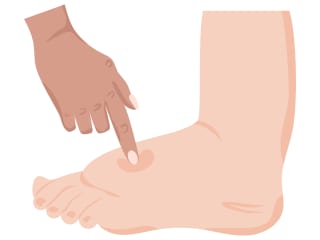
Swollen feet and ankles: common causes and when it’s seriousWhy feet and ankles swell, how to tell everyday puffiness from swelling linked to the heart, kidneys, liver, veins or a blood clot, and when to get help.
-
Podiatry
Ball of foot pain (metatarsalgia): causes, relief and when to worryWhat causes ball of foot pain, from metatarsalgia and Morton’s neuroma to sesamoiditis and stress fractures, how to relieve it and when to worry.